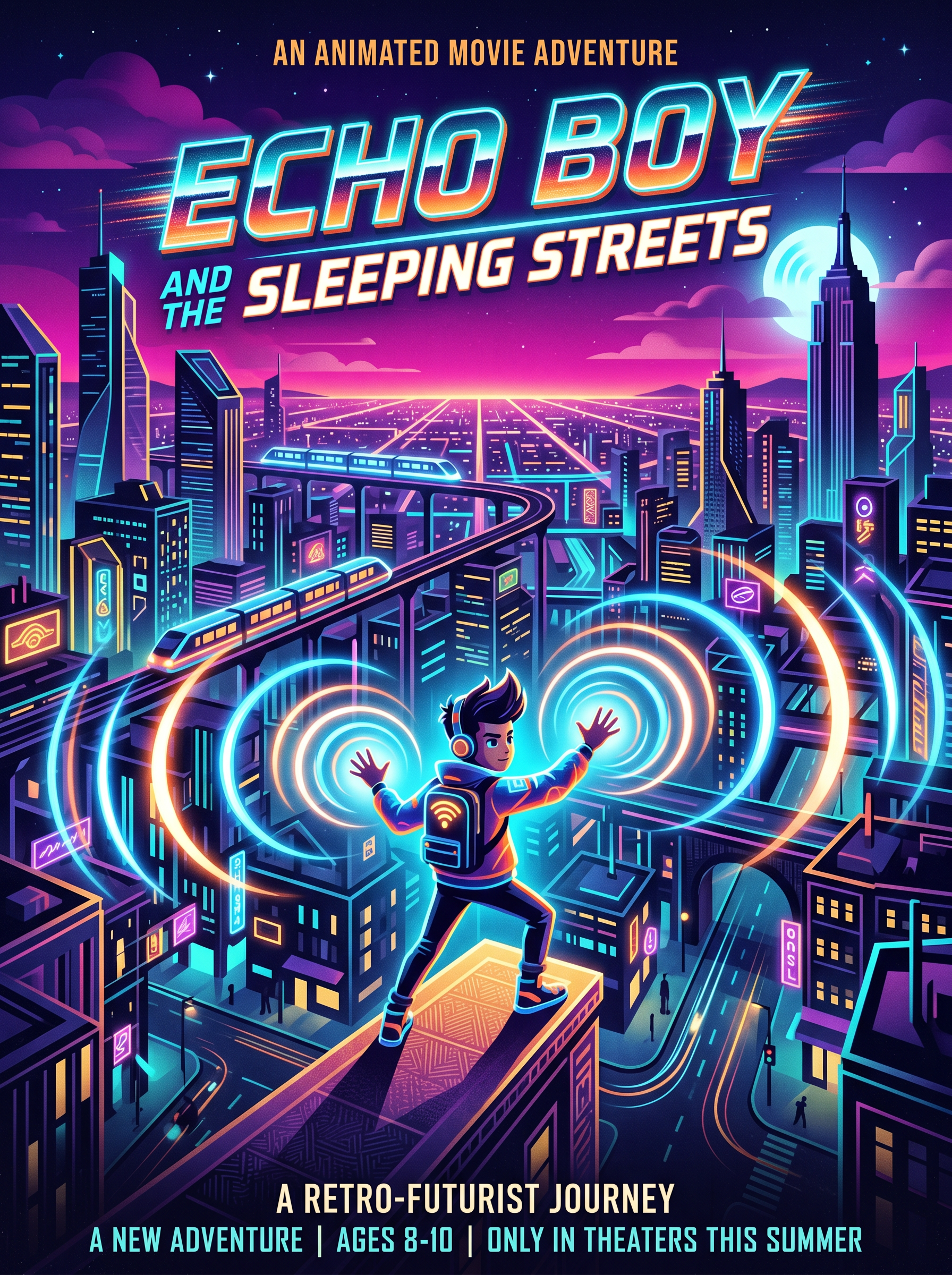
A Moment of Magic: Seeing Themselves in a Story
When 5-year-old Liam first watched his very own Mero film, his eyes widened with disbelief and excitement. "That's me!" he exclaimed, pointing eagerly at the screen. It was a magical moment, not just for Liam, but for his family too.
In those 90 seconds of cinematic wonder, Liam saw himself not merely as a character, but as the hero of his own story, battling imaginary dragons and solving mysteries right from his bedroom. This glimpse into a world where he was the protagonist fueled his imagination, blending the lines between reality and creativity.
Such moments are pivotal in a child's life. They ignite the imagination and make the abstract concept of storytelling tangible and personal. Liam's story illustrates how seeing oneself in a narrative can be a powerful force in shaping identity and boosting confidence.
The Developmental Benefits of Storytelling
Storytelling is more than just entertainment; it's a foundational element of child development. The American Academy of Pediatrics emphasizes the critical role of play in cognitive and social growth, noting that narratives help children build a sense of the world around them.
Through storytelling, children learn essential language skills, develop empathy, and understand complex concepts like cause and effect. PBS KIDS for Parents suggests that stories not only educate but also engage a child's imagination, sparking creativity in ways that rote learning never could.
Personalized storytelling takes these benefits a step further by placing the child at the center of the narrative. They don't just listen to a story; they live it, with their unique traits and experiences woven into the fabric of the tale.
The Power of Personalized Storytelling
Personalized stories offer a unique kind of magic. Unlike generic tales, these narratives are crafted around the child's identity, incorporating their name, features, and personal stories. This approach reinforces the idea that their life and experiences are meaningful and worth telling.
Reading Rockets highlights that when children see themselves in stories, they connect more deeply with the narrative, fostering a stronger sense of belonging and self-worth. It becomes an affirmation of their importance in the world around them.
When children like Liam become the heroes of their own stories, they aren't just entertained; they are validated. They understand that they matter, and their stories deserve to be told.
Imaginative Play: A Gateway to Creativity
Imaginative play is a natural extension of storytelling, serving as a gateway for children to explore complex ideas and emotions in a safe environment. It allows them to experiment with different identities, roles, and scenarios.
The National Association for the Education of Young Children underscores the significance of play in learning and development. Through imaginative play, children practice problem-solving, negotiation, and social skills, crucial for their growth.
By integrating storytelling with play, children like Liam don't just passively consume stories; they actively participate, reshaping narratives with their creativity, further solidifying their understanding and control over their personal world.
Connecting Identity and Personalization
In a world filled with mass-produced content, personalization is more than just a feature—it's an essential component of identity formation. When children see their lives reflected in stories, it affirms their experiences and emotions as significant.
The American Academy of Pediatrics suggests that children build their identity through narratives, pointing out how self-referential storytelling can lead to a healthier self-image and increased self-esteem.
For children, being the hero of their own personalized story is not just about fun or novelty; it's about recognition and belonging. This personal connection transforms storytelling from a passive activity into an empowering experience.
Storytelling as a Shared Family Experience
Personalized storytelling is not just a solitary experience; it becomes a shared family activity, creating lasting memories and strengthening bonds. When families watch a Mero film together, they celebrate the child's uniqueness and achievements.
PBS KIDS for Parents advocates for family involvement in storytelling, encouraging parents to engage with their children, discussing stories and their meanings. This interaction enriches the viewing experience and reinforces the child's sense of identity and belonging.
By sharing in these personalized narratives, families not only support their child's development but also weave a familial narrative, one where each member plays a role in the story's unfolding.
The Digital Age: Personalized Stories on Screen
In today's digital landscape, personalized storytelling offers a refreshing counterpoint to the often impersonal nature of technology. Unlike generic media, which can sometimes feel disconnected, a Mero film is all about connection—personal, familial, and emotional.
The American Academy of Pediatrics advises parents to focus on media quality over quantity, highlighting the value of shared, intentional screen time. A personalized Mero film fits perfectly within these guidelines, offering a brief yet meaningful experience tailored specifically to the child.
Through digital storytelling, children engage with narratives that speak directly to them, bridging the gap between traditional storytelling and modern technology.
Why Personalization is More Than Decoration
Personalization in storytelling is often misunderstood as a mere decorative element. However, it is far deeper, acting as a critical tool in personal and cognitive development.
Children build their identity through stories that involve them personally. NAEYC stresses the importance of culturally and personally relevant content in learning, which helps children relate better and engage more deeply.
For children, a personalized story becomes a reflection of their own life, offering them a mirrored view of their experiences, validating their emotions, and encouraging self-expression. It's not just about seeing their name in lights; it's about recognizing their story in the world.
The Future of Storytelling: Personalized and Inclusive
As the landscape of storytelling evolves, personalization and inclusivity stand at the forefront. These elements ensure that every child sees themselves reflected in narratives that celebrate diversity and individual uniqueness.
The American Academy of Pediatrics and other educational bodies advocate for inclusive storytelling, emphasizing its role in fostering empathy and acceptance among children.
Mero's approach to storytelling embraces this future, offering personalized, cinematic experiences that cater to a wide array of backgrounds and interests. By doing so, Mero ensures that every child, regardless of their story, finds a place where they belong.
Frequently asked questions
How does seeing themselves as the hero of a story help a child?
Children build identity partly through narrative — the stories they hear shape how they see themselves. When a child becomes the literal hero of a film, with their own name, their own face, their own character traits in the script, it reinforces the felt sense that their experiences are worth telling. Reading Rockets, Zero to Three, and the American Academy of Pediatrics all point to the developmental value of children seeing themselves represented in stories.
What age should I introduce personalized stories to my child?
There's no minimum, but the way it lands depends on the age. Toddlers (1-3) respond best to short, soothing bedtime films. Children 4-7 grasp the "hero is me" idea and love the reveal. Children 8-12 engage with more complex emotional themes. Teens 13-17 respond to coming-of-age narratives that take their inner life seriously. Mero has stories across all of these.
Are personalized story films screen time worth allowing?
A 1-2 minute personalized film a few times a week is in a different category from open-ended algorithmic video. It's a finite, intentional, family-shared experience tied to your specific child's identity. The American Academy of Pediatrics recommends parents focus less on raw minutes and more on the quality of what kids watch and whether parents engage with them around it.
How long does it take to receive a Mero personalized story film?
Standard delivery is 7 days from the moment you submit your child's details. If you need it sooner for a birthday, holiday, or special event, an expedited rush option is available at checkout. Every film is hand-crafted, so the timeline is shorter than people usually expect for a fully personalized cinematic short.
What ages is a Mero film suitable for?
Mero films span the full childhood arc, from gentle 1-3 minute bedtime stories for toddlers up to coming-of-age cinematic shorts for teens aged 14-17. Each story in the catalog has its own age range, and parents pick the one that fits their child's developmental stage and emotional moment.
How is a Mero film delivered?
You receive a high-quality MP4 video file by email plus a secure private streaming link, so you can play it on a phone, TV, or laptop and share it with grandparents and friends. The matching digital storybook (included with paid film plans) is delivered as a private digital link — there's no physical book mailed today.
Create Your Child's Story
Step into a world where your child is the hero. Create a personalized Mero film today and watch their imagination soar.
Create Now